Every morning before sunrise, a seven-year-old boy stood silently outside the wooden gate of Silver Creek's largest cattle ranch.
He never knocked, never called out, and never asked for help.
Clutched against his oversized brown jacket was a small brown backpack, his dusty boots planted in the dirt while a red scarf hung loosely around his neck.
For 61-year-old rancher William Hayes, that quiet vigil shattered eight years of practiced solitude.
William owned thousands of acres, employed dozens of ranch hands, and lived in a sprawling wooden house overlooking the Silver Creek valley.
Yet wealth had bought him no company at the dinner table.
His wife had died eight years earlier, and his only daughter, Emily, had walked out years before after a bitter argument, severing all contact.
William ate his evening meals alone beside the fireplace, avoided town, and skipped family celebrations that only sharpened the ache of what he had lost.
His ranch hands respected him deeply, though they knew better than to pry into his grief.
Then came the Monday morning William walked toward the main gate and spotted the boy.
William asked if he was waiting for someone, and the child answered simply that he was just waiting.
Down the empty road, there was no wagon, no horse, and no adult in sight.
The boy gave his name as Eli and murmured that his mother was busy before falling silent again.
William returned to the house assuming the child would wander home, yet Tuesday brought Eli back to the exact same spot.
Wednesday and Thursday followed the same pattern, until William found himself waking earlier just to see whether the small figure would reappear.
One cold morning, William carried out a warm biscuit and invited Eli inside for breakfast.
Eli accepted the biscuit with both hands and thanked him politely, yet refused to cross the gate because his mother had told him not to enter unless someone asked.
Even when William insisted he was asking, the boy quietly shook his head and said not today.
Determined to keep a child out of the morning chill, William ordered his foreman, George, to track down the boy's parents.
Before George could uncover anything, the next morning delivered a clue that stopped William cold.
Eli was sitting in the dirt beside the gate, cradling a scratched wooden horse missing a fleck of paint near its tail.
William stared at the toy and asked where it came from.
Eli explained that his father had carved it and called it special.
When William crouched down and asked his father's name, the boy hesitated before saying Daniel.
The name struck William li,ke a thunderclap.
Six years earlier, a hardworking, honest man named Daniel had worked on the ranch and become William's closest friend after his wife's death.
Daniel had eventually left Silver Creek to build a family of his own in another town, and though the two men promised to stay in touch, years of silence had swallowed the distance between them.
Eli nodded when asked if his father had worked on the property, adding that Daniel had described William as a good man who sometimes forgot that people needed him.
Those words sounded unmistakably li,ke the friend William had lost.
That evening, George checked Daniel's old address only to find an empty house and neighbors who said the family had moved away years ago.
The next dawn, Eli arrived clutching a folded sheet of paper tightly against his chest.
His hands trembling as he recognized the familiar handwriting, William opened the letter.
Daniel had written a brief plea asking William not to turn his son away if the boy ever found his way to the ranch gate.
The note called Eli his greatest blessing, admitted Daniel had been too ashamed to return after years apart, and urged William to remember the promise they had made beside the old oak tree.
William read the lines three times before looking up to ask where Daniel was.
Eli's face fell as he explained that his father had grown sick, spent a long time in the hospital, and died after telling his son to find the man at the big ranch if he ever needed help.
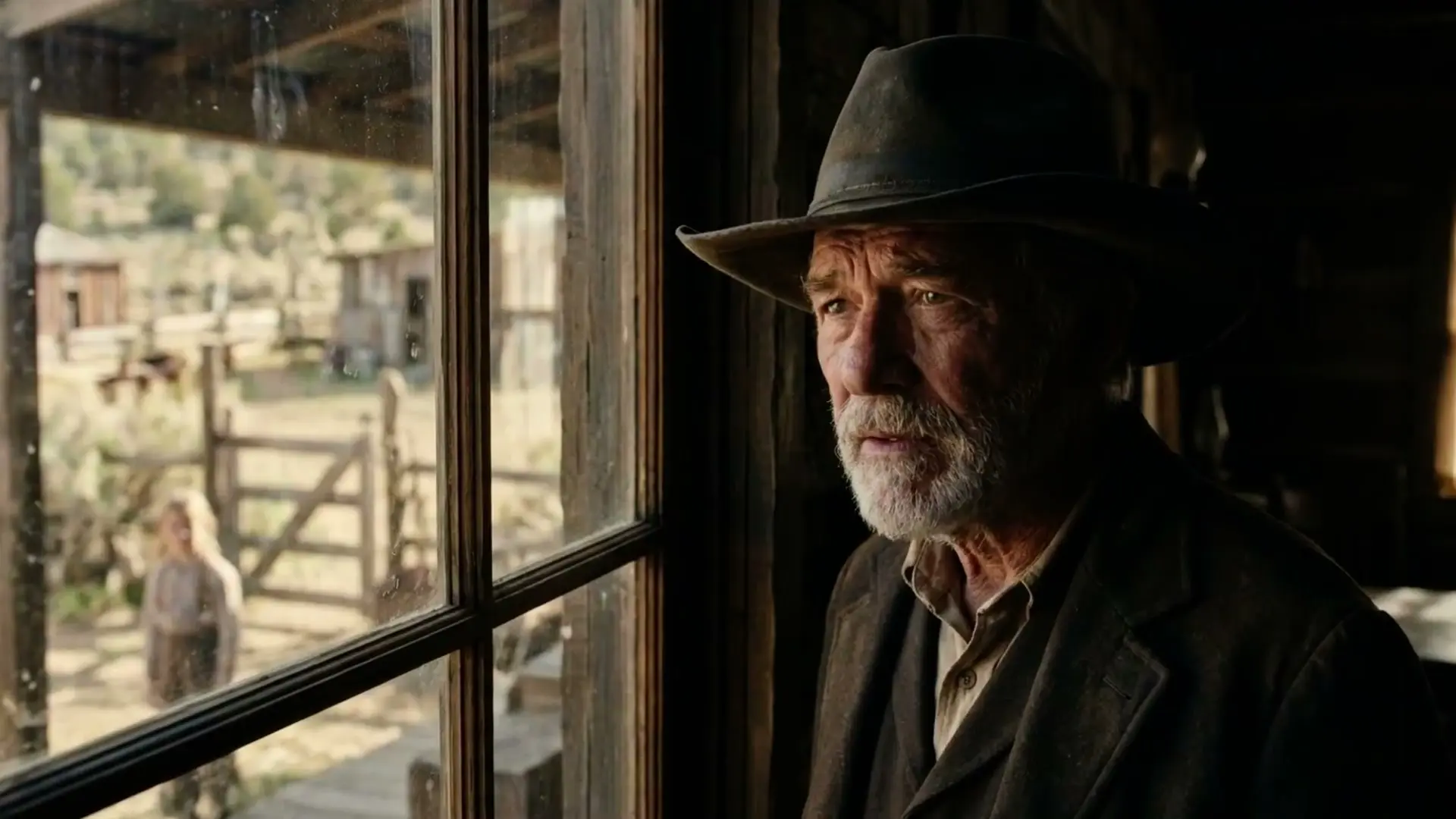
Grief hit William all over again as he realized his closest friend was gone and had entrusted him with his only child.
Kneeling in the dirt, William learned that Eli's mother worked grueling night shifts in town and had no idea her son was walking out to the ranch at dawn.
Eli admitted he kept coming back because his father had hoped William might remember him.
With tears stinging his eyes, William assured the boy he remembered Daniel very well, earning Eli's very first smile.
That smile broke the last wall around the rancher's heart, and William swung the gate wide open.
Inside the ranch house, William cooked breakfast himself, setting eggs, bread, and warm milk before a hungry child who cleaned his plate and eagerly accepted seconds.
Afterward, William led Eli through the stables, laughing as the boy marveled at the horses and peppered him with questions for an hour.
For the first time in nearly a decade, a child's laughter echoed through the wooden house.
Still, William knew he had to speak with Eli's mother.
That afternoon, George reported that a woman named Sarah had recently rented a small room near the old church and worked in a hotel kitchen while raising a young boy.
William drove into town and knocked on the door of a modest house, where an exhausted woman in her early thirties answered.
The moment William introduced himself and mentioned Eli, panic flashed across Sarah Miller's face until William assured her the boy was safe at his ranch.
Covering her face with one hand, Sarah apologized through tears, explaining she had warned Eli not to bother anyone.
Inside her sparse room, Sarah revealed that Daniel had died six months earlier after a long illness, leaving her with no nearby relatives, little money, and endless shifts to keep them afloat.
Daniel had spoken often of William as a man who never forgot a kindness, yet Sarah had been too proud and embarrassed to ask for help.
William asked if Daniel had ever mentioned the old oak tree on the ranch.
Sarah nodded, recalling the story of a vow made years ago.
William explained that when Daniel first arrived at the ranch broke and homeless, they had sat beneath that oak tree one evening while Daniel spoke of hoping to have a son one day.
William had sworn then that if Daniel's family ever stood alone, his ranch would always be open to them.
Refusing to let Sarah call it charity, William offered her a paid position managing the household and organizing meals for the ranch hands, complete with a small cottage near the stables where Eli could grow up safely.
Sarah hesitated before asking whether Eli would truly be welcome, and William replied that the boy had been welcome since the first morning he stood outside the gate.
The following week, Sarah and Eli moved into the cottage, where Eli claimed a room of his own with a window overlooking the horses and received a small wooden toolbox from William to help care for the stables.
More than the cottage, the routine transformed William.
He shared breakfast with Sarah and Eli, took the boy on short rides across the acres, and spent evenings beside the fireplace listening to Eli ask whether his father had been brave.
William assured him Daniel had been braver than most men he knew and that Eli had been his father's greatest dream.
By Christmas Eve, the ranch house glowed with lights, candles, and a decorated tree that William had kept packed away for eight years after his wife's death.
Eli called William over to place a slightly uneven, gold-painted wooden star on the top branch, explaining that Daniel had taught him how to carve wood.
Lifting the boy to reach the crown of the tree, William remembered the identical wooden star Daniel had carved for his late wife years before.
Later that night, William told Sarah and Eli that he intended to honor Daniel's letter permanently and promised that the ranch would be Eli's home for as long as he needed it.
Eli leaped from his chair, threw his arms around the rancher's neck, and whispered a single word that left William weeping: Grandpa.
Christmas morning dawned over fresh snow with Eli racing through the house in new boots William had bought him and handing the older man a wrapped wooden frame holding Daniel's photograph.
Beneath the picture was a handwritten line dedicated to the man who remembered his father.
Months later, the boy who once waited silently outside the fence opened the main gate himself every morning while William watched smiling from the porch.
Standing beneath the old oak tree one afternoon, Sarah asked why Daniel had sent Eli to Silver Creek instead of seeking help elsewhere, and William answered that his old friend knew the rancher needed the boy just as much.
A promise whispered beneath an oak tree had outlived grief, turning a solitary stretch of land back into a living home.