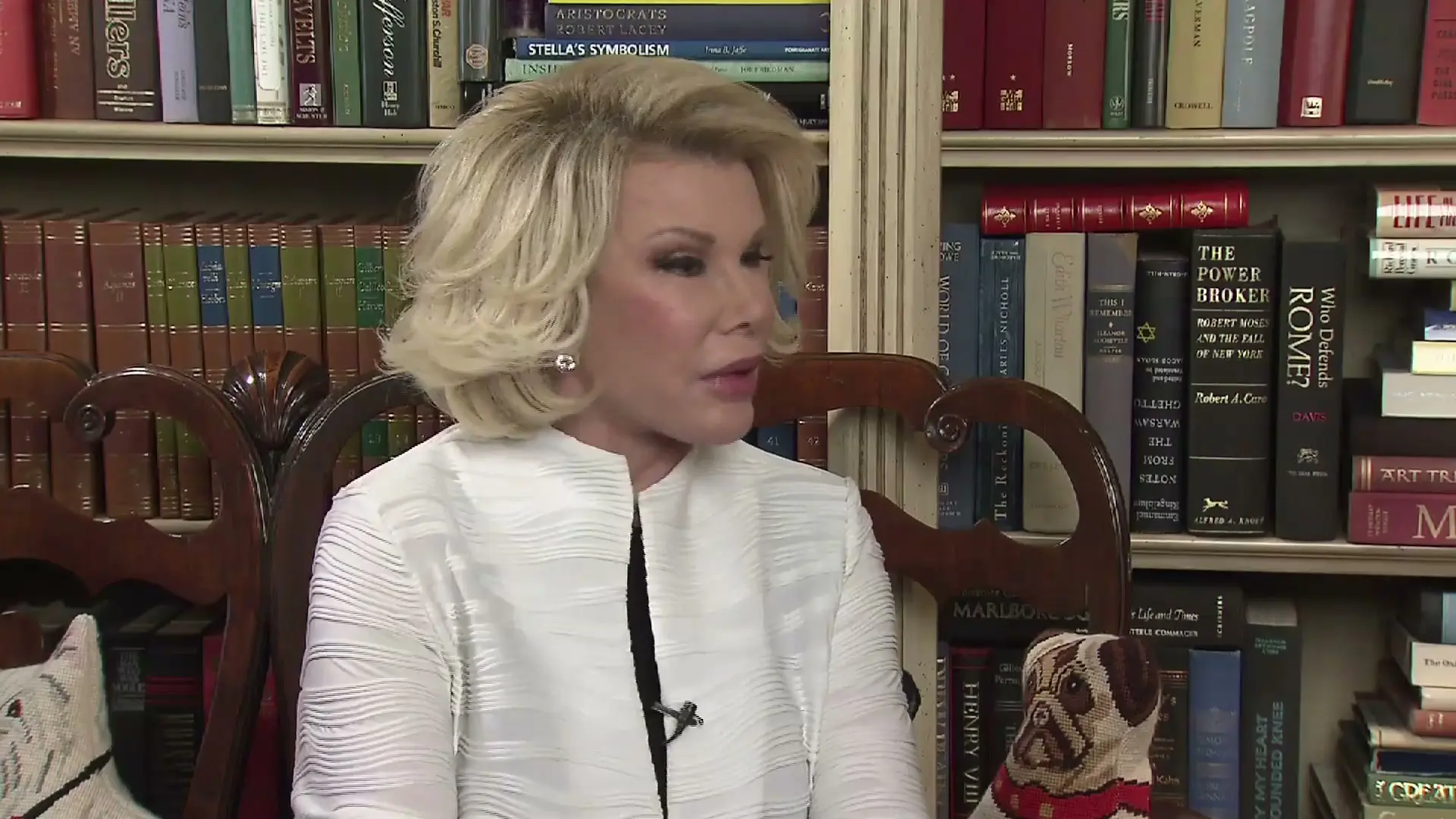
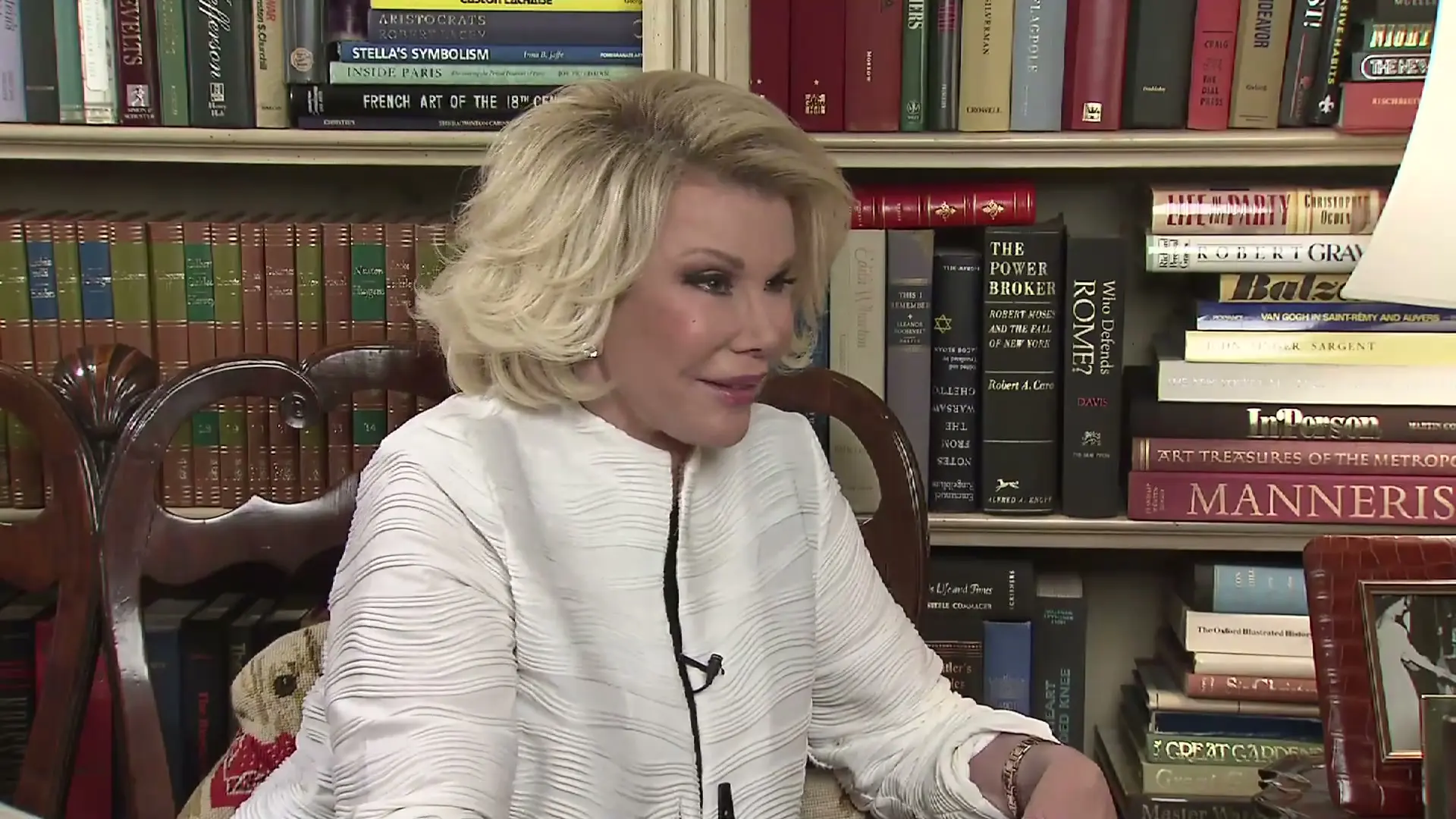
In a candid Manhattan apartment setting, Joan Rivers, ever the master of unfiltered honesty, peeled back the layers of her life, touching on everything from the complex dance with her daughter, Melissa, to the stark realities of comedy and her own impending mortality.
Her face, a testament to decades in the limelight, still moved, as she quipped, “You should be glad my face still moves.”
This conversation, a window into the Joan and Melissa series, revealed the profound emotional tapestry woven between a mother and her child.
“Joan and Melissa” was built on the tension between you and your daughter, the interviewer noted.
“It’s a real mother-daughter relationship, and many people don’t show that,” Rivers responded, acknowledging the show’s raw authenticity.
When pressed about the biggest differences between them, Rivers offered a laugh-out-loud moment.
“Well, she’s much more different…one of those things is her dog would never be on the couch,” she began.
“So…she’s much neater than I am and she’s very much li,ke her dad, you know, you forget 50% is from her father.”
But beneath the humor lay a deeper, more poignant reflection.
Rivers found startling similarities between her relationship with Melissa and her own mother, a revelation that brought a wave of sadness.
“I see it,” she confessed, her voice softening.
“And it makes me so profoundly sad because I know after I die, she’s going to go.”
“My mother was right, I should have listened to her more, or oh, I wonder if I hurt my mother when I said that.”
This realization, she believed, wouldn't fully dawn on Melissa until her son echoed a similar sentiment.
Rivers recalled a specific pain from her past with her own mother.
“You didn’t even tell me you were moving to Los Angeles until it was all done, you know what I mean?”
she imagined her son saying.
“I never even said, ‘Do you think I should go?’
I just called and said, ‘Next month we’re going.’”
Did that wound her deeply, the interviewer asked.
“My mother never told me that, but she told a friend and it broke my heart,” Rivers admitted, her vulnerability palpable.
“Nothing.
I can’t discuss it.”
It’s the quintessential mother-daughter dynamic, she mused.
“Mother and daughter, you love each other to death, but nobody can love you li,ke a mother’s love, never, never, never.”
Rivers observed that daughters often underestimate their dependence on their mothers.
“They don’t realize how much they depend on their mothers,” she said.
“They think they’re all very strong and they can be 65, their mother dies, and suddenly they go, ‘How am I going to live with my mother?’”
“It’s very complicated.”
Fortunately, Melissa, she noted, was doing “great.”
The conversation shifted to Rivers' decision to enter the world of reality television, a departure from her usual talk shows and red-carpet interviews.
Was there any hesitation in taking on a show so different from her previous work?
“Zero hesitation on my part because, um, ever since I went on the Carson show, I have been very lucky that they have really known about my life,” Rivers explained, touching on the unique connection she shared with her audience.
“I can’t explain it.
People know that they used to know me when I was single, they knew me when I married, they knew when I had Melissa, and certainly many of them knew me when Edgar, my husband, committed s,ui,ci,de, and when I was fired from Fox.”
“So, it’s just an extension.”
For Rivers, there was no fear of revealing too much.
“I was never worried about revealing anything because my life is an open book,” she declared.
Melissa, however, was a different story.
“Melissa is different, her life is not an open book,” Rivers clarified.
“She had a much harder time than I did.”
They had discussed it before diving into reality TV.
“I said, ‘You cannot say, ‘No, no, that’s taboo,’” Rivers recounted.
Rivers' multifaceted career, from the biting wit of “Fashion Police” to her more supportive role on QVC, sparked a question about her true persona.
“What’s interesting about you is how different you can be in different aspects of your career,” the interviewer observed.
“When you’re doing ‘Fashion Police,’ you’re cracking jokes, you’re satirizing celebrities for their outfits, but when you’re selling your clothing or your beauty line on QVC, you play more of the helper.”
“So, I’m curious to know which persona is closer to the real you?”
“Who are you?”
“We’re all very different,” Rivers responded, acknowledging the complexity of human personality.
“You know, everybody has many facets to their personalities.”
“It depends on the assignment.”
On “Fashion Police,” her mission was clear.
“My assignment on ‘Fashion Police’ is to tell the truth,” she stated emphatically.
“And my job, my loyalty is to the audience.”
“And the audience I always think of are friends.”
“If I’m sitting in a living room and we’re watching these pictures, this is what I would say about the person.”
“This is what I would say about the situation.”
“So that’s ‘Fashion Police.’”
On QVC, her loyalty shifted.
“On QVC, I’m always backing the ladies and wanting to help them look better,” she explained.
She recalled a moment on QVC where a host wanted to sell a set together.
“And I said, ‘No, you don’t have to,’” Rivers recounted, prioritizing the customer's needs over a sales pitch.
“Because I don’t want them to look li,ke idiots.”
“So, the most important thing is I want to reach my audience, I want to be honest to them.”
Rivers then delved into her personal philosophy, which embraced risk-taking and rejected political correctness.
“It’s about taking chances, actually,” she mused.
“But that’s who I am in life.
I can’t stand political correctness.”
She saw it as a societal detriment.
“I think it’s one of the reasons society is falling apart,” Rivers opined.
“Everybody’s so afraid to say anything.”
“Everybody’s pulling the race card.
You know, no matter that I’m a woman or you touch me.”
“Oh, relax.”
“And that’s why you fired me.”
“We fired you because you’re stupid.”
“That’s why we fired.”
“You know, and if you say that…I mean, everybody’s busy in human resources every second.”
She recalled a past statement about wanting to shock her audience.
“I remember you once said that you want 7% of an audience to walk out shocked,” the interviewer prompted.
“Yes,” Rivers confirmed.
“Why is that?”
“Because it means you have shaken them up and woken them up to deal with things that they haven’t dealt with,” she asserted, revealing the deeper purpose behind her provocative humor.
She enjoyed challenging perceptions.
“I li,ke to pick them up and go, ‘Look,’” she said.
“Does that have to do with political correctness?”
“For God’s sake, stop and look at this.”
“And, um, comedy is rough and, um, I li,ke that.”
“I li,ke that you can talk about things that people say you shouldn’t.”
“Yeah, you can, unless…”
Did she ever revisit old material and find it unfunny?
“Always,” she responded without hesitation.
“I very rarely look in a mirror.”
“I have never seen a ‘Fashion Police’ show.”
“Because when I look back, I go, ‘Not funny.’”
“Not good.”
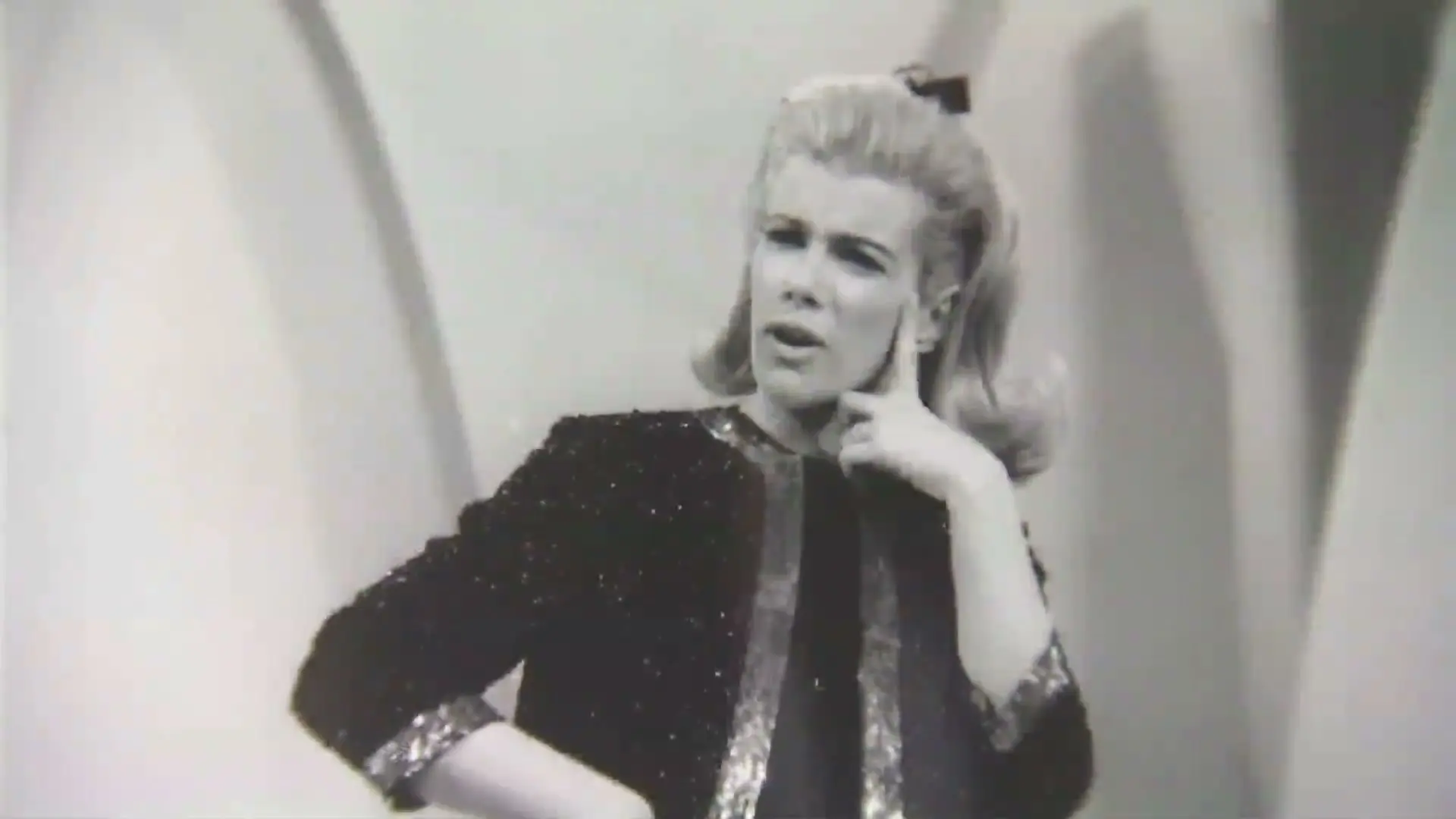
She referenced old Ed Sullivan shows.
“They did a whole series on Ed Sullivan,” she said.
“And you go, ‘How did she get on there?’”
“She’s not funny.”
“It has nothing to do with me.”
“So you’re looking at a stranger and you go, ‘Weird.’”
“Because it’s 40 years later, because you’re different, times have changed.”
“They’re different, what they laughed at was different, and maybe it was very shocking at the time, but now, you go, ‘Not great.’”
When asked who made her laugh now, Rivers was quick to praise a new generation of comedians.
“Who do you li,ke now?”
the interviewer asked.
“I mean, who makes you laugh now?”
“Oh, there’s a whole new generation coming in here,” Rivers exclaimed.
“Louis C.K. is just astounding me right now.”
“Great, great, great.”
The gender of a comedian mattered to her in a specific way.
“Does it matter to you if a comedian is male or female?”
the interviewer inquired.
“Do you find yourself drawn more to one?”
“I tend to be drawn more to men,” she admitted.
“Because women…”
“I don’t want to hear women talk about se.x the way men talk about se.x.”
“I think that’s a generational thing.”
“Just look good.”
“That’s it.”
“And marry rich.”
Yet, Rivers herself spoke extensively about se.x in her act.
“But you talk about se.x in your act,” the interviewer pointed out.
“A lot,” she confirmed.
“I talk about se.x a lot in my act.”
“And about it, but from a woman’s point of view.”
“Always.”
“Yeah, yeah, because that’s what I am.”
“You’re not trying to be a man,” the interviewer clarified.
“I’m not trying to be a man,” Rivers affirmed.
“I’m not saying, li,ke, ‘Hey, last night I slept with six six people.’”
“You know, ‘I I I.’”
“What are you talking about?”
“No, it’s always the female point of view,” she reiterated.
“And, um, my age and how awful it is, because my friends are all dropping li,ke flies.”
“Really?”
“Oh, every week there’s a funeral.”
She found humor even in the face of death, recalling a humorous obituary.
“I love in the New York Times, ‘Sadie Schwartz, 106, died suddenly.’”
“Not so suddenly.”
“Sadie Schwartz, 106, it was about time.”
Joan Rivers, a force of nature, concluded with a characteristic blend of wit and practicality, reminding us that even in death, her unique brand of humor would find a way to shine through, leaving a legacy of laughter and uncomfortable truths.